Auto - Insectification (2026)
Auto-Insectification is an installation that stages a transformation away from the construction of artificial humans, offering the insect as a mythopoetic model for another kind of life. The work engages with the long history of Western fantasies of the artificial person, traced through the figure of the Golem, the alchemical homunculus, Frankenstein’s Creature, Robots, and Contemporary AI. These figures gather under what I called the ‘Homunculus’, defined as the cultural form through which human beings imagine artificialized versions of themselves. More specifically, it is the inhuman, human-made intelligence through which the human models and remakes itself. While the homunculus is constructed as a mirror of humanity, it ultimately exerts pressure on the human to become more like its technical double.
The central tension of the exhibition is exactly this: the mimetic trap laid by the figure of the homunculus. In attempting to mimic the mimic, human beings accept an impoverished image of ourselves. The homunculus has undergone a recent change: it no longer requires a human(oid) body - it is any technical system that can effectively and convincingly mimic functions previously treated as uniquely human. The danger of the homunculus is no longer a myth, no longer science fiction, it is an impending threat that the human being may narrow in what can be extracted, optimized, automated, and reproduced.
Auto-Insectification begins where the mimetic trap becomes visible. Rather than answer the threat of the homunculus with another image of the human, the show searches for another orientation. This counter-image is found in the figure of the insect. The homunculus is organized around mimicry, mastery, technical transcendence. The insect offers distributed cognition, fractured embodiment, immanence, entangled life. The insect does not promise a higher or more perfect humanity, it offers only the world. Through the figure of the insect, human beings can escape the homuncular trap and rejoin the world. Auto-Insectification is movement away from humanity, away from a worldview that places humanity at the center of the world.
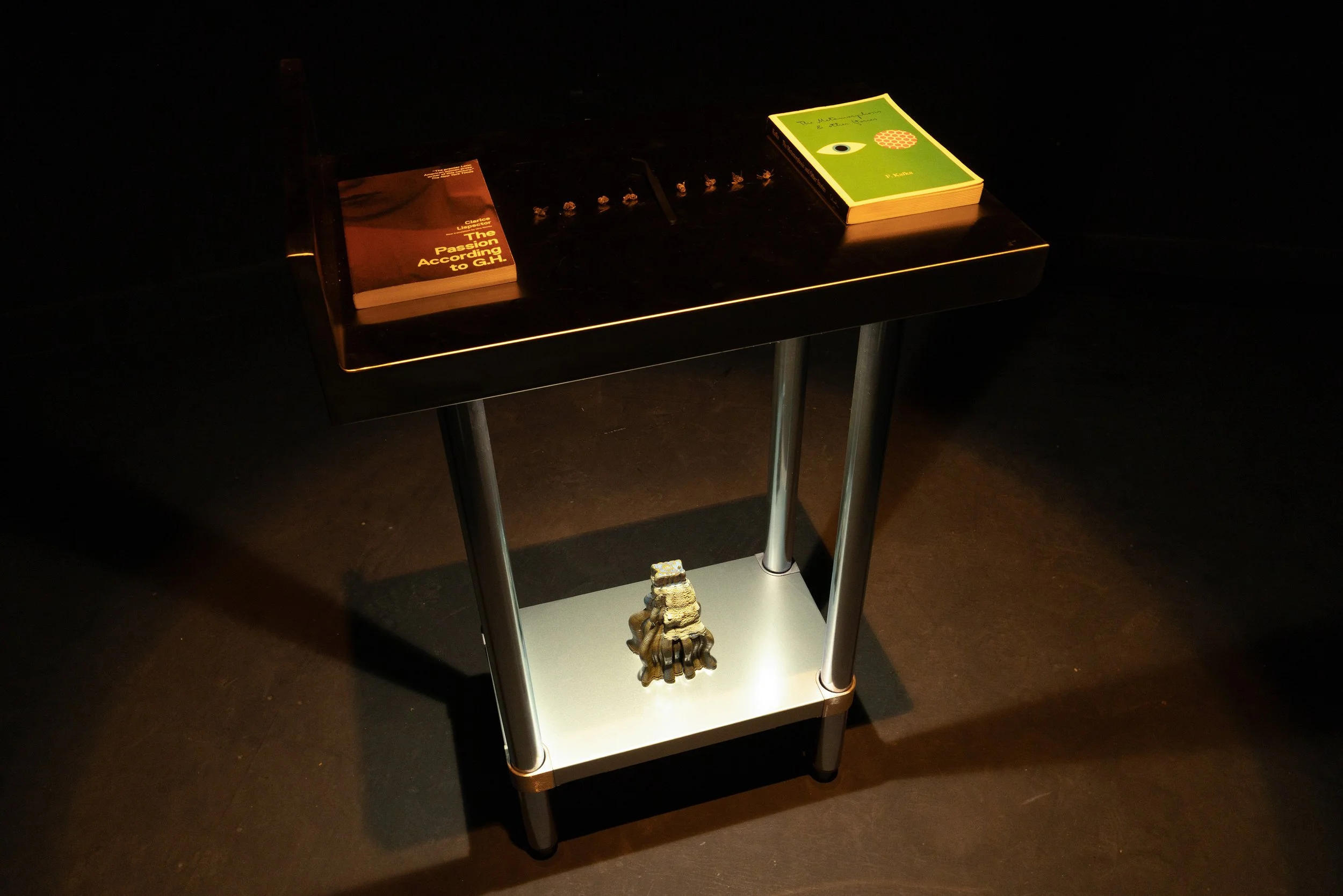
In establishing the figure of the insect, I rely on what I call the ‘Kafka-Lispector Axis of Insectification’. This opposes two narratives where people are radically identified with an insect. On one end sits Kafka’s The Metamorphosis, on the other end sits Clarice Lispector’s The Passion According to G.H. Within Kafka’s story, insectification is a degradation of the human, a process of dissolving social reality. Within Lispectors, the identification with insecthood dissolves a particular standard of transcendence that positions human beings above nature. Through the identification with the insect, the human is able to return to a lateral relationship with the other components of the world, to re-enter the continuum of life. Auto-Insectification sits firmly on the Lispector pole of the axis.
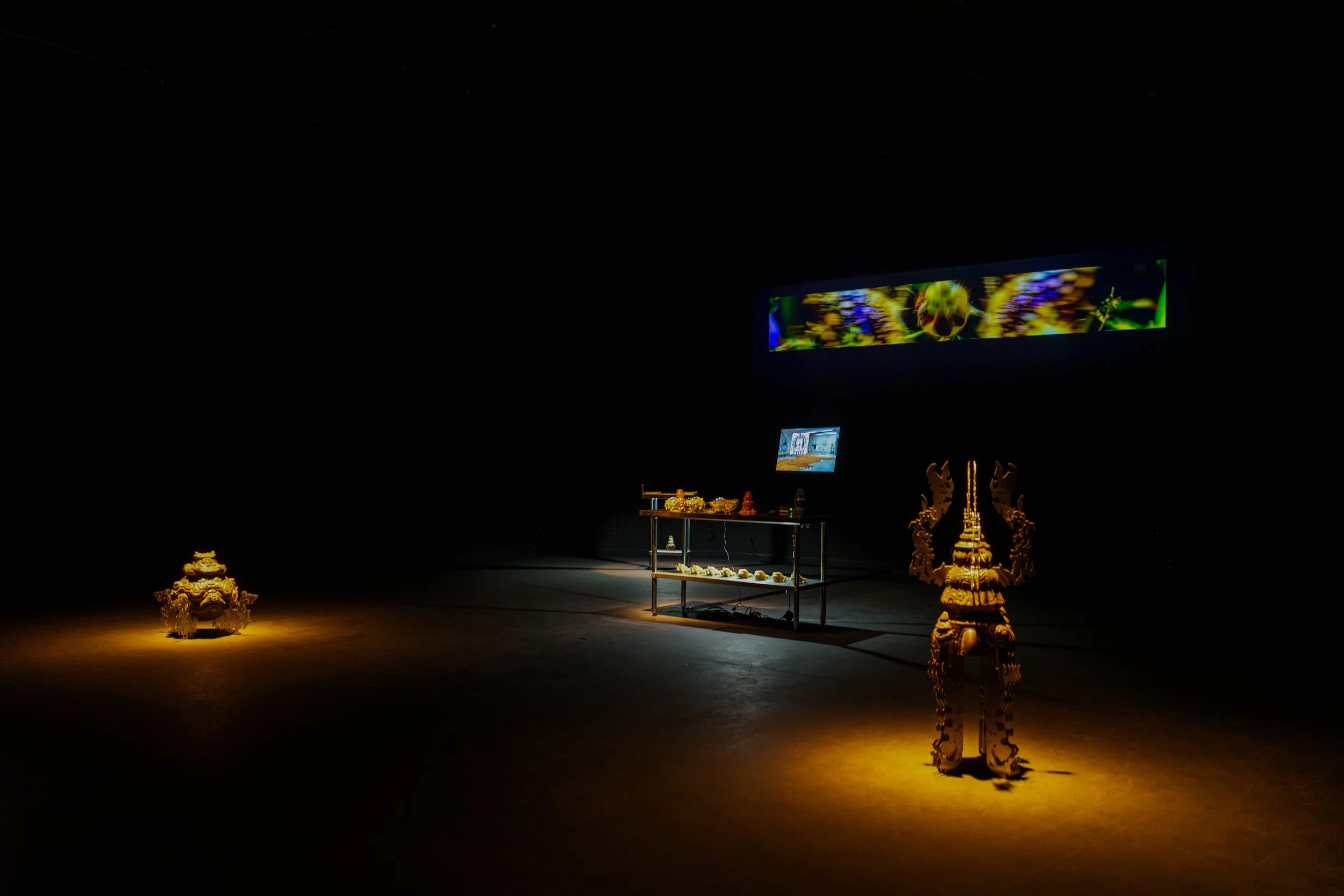
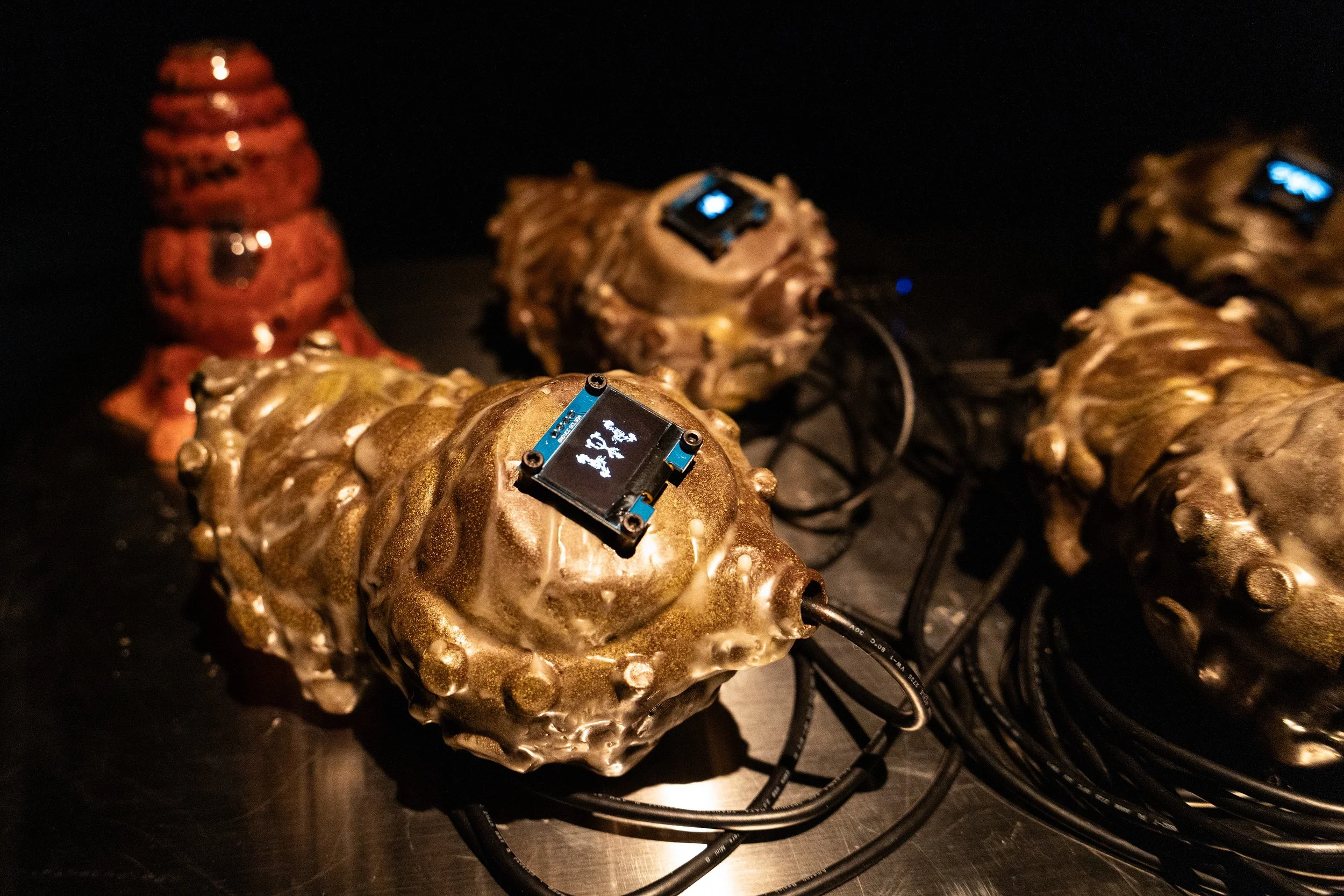
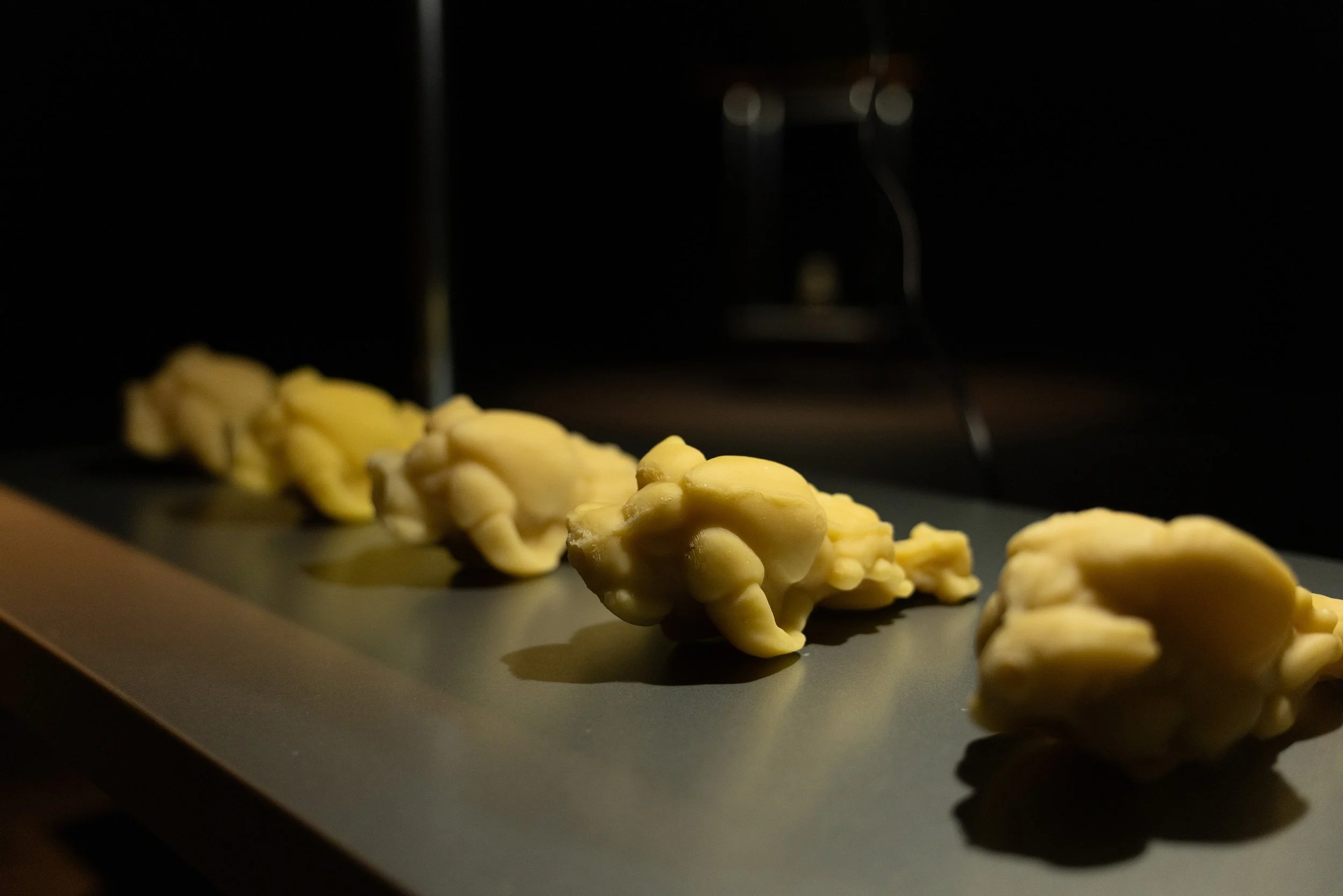
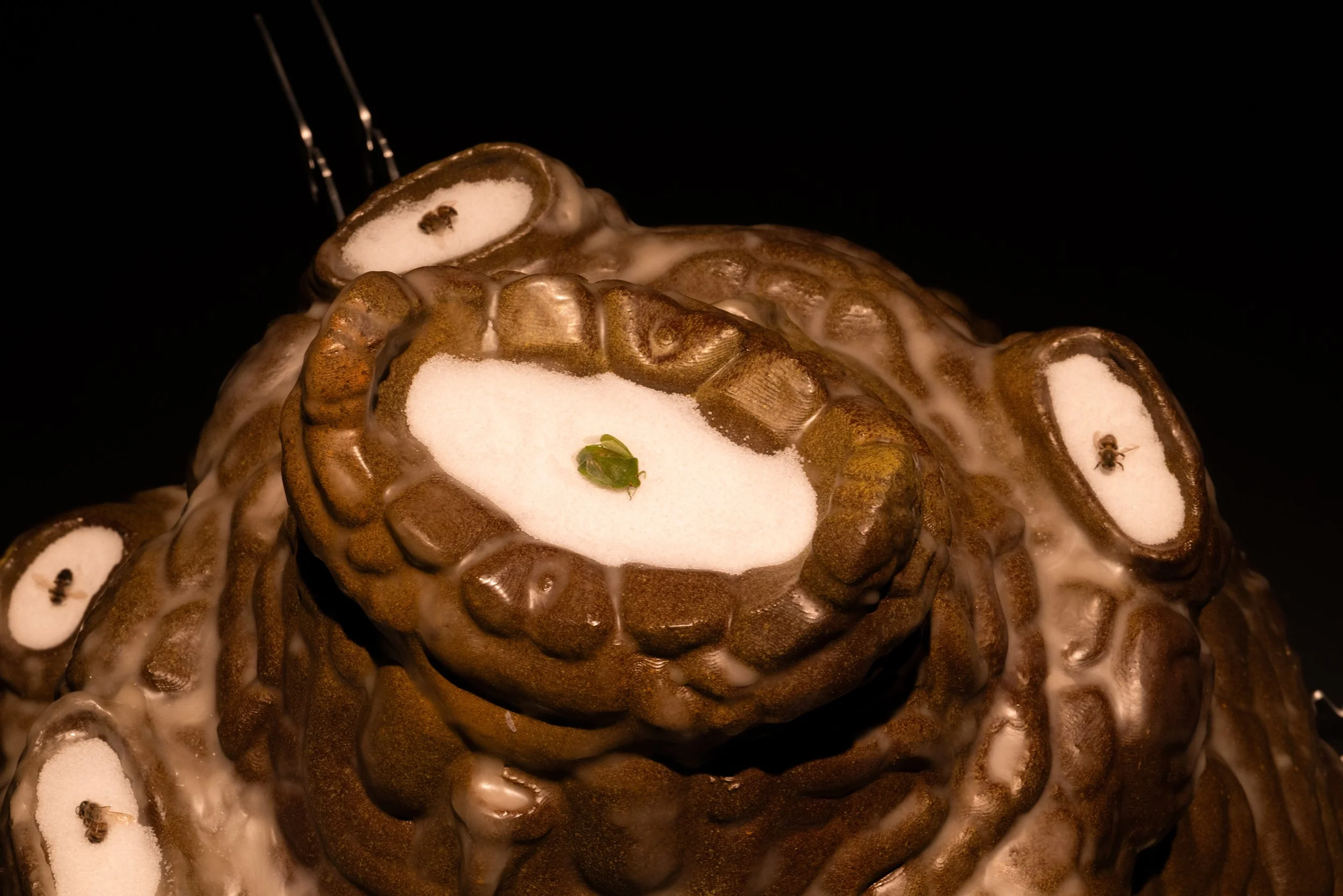
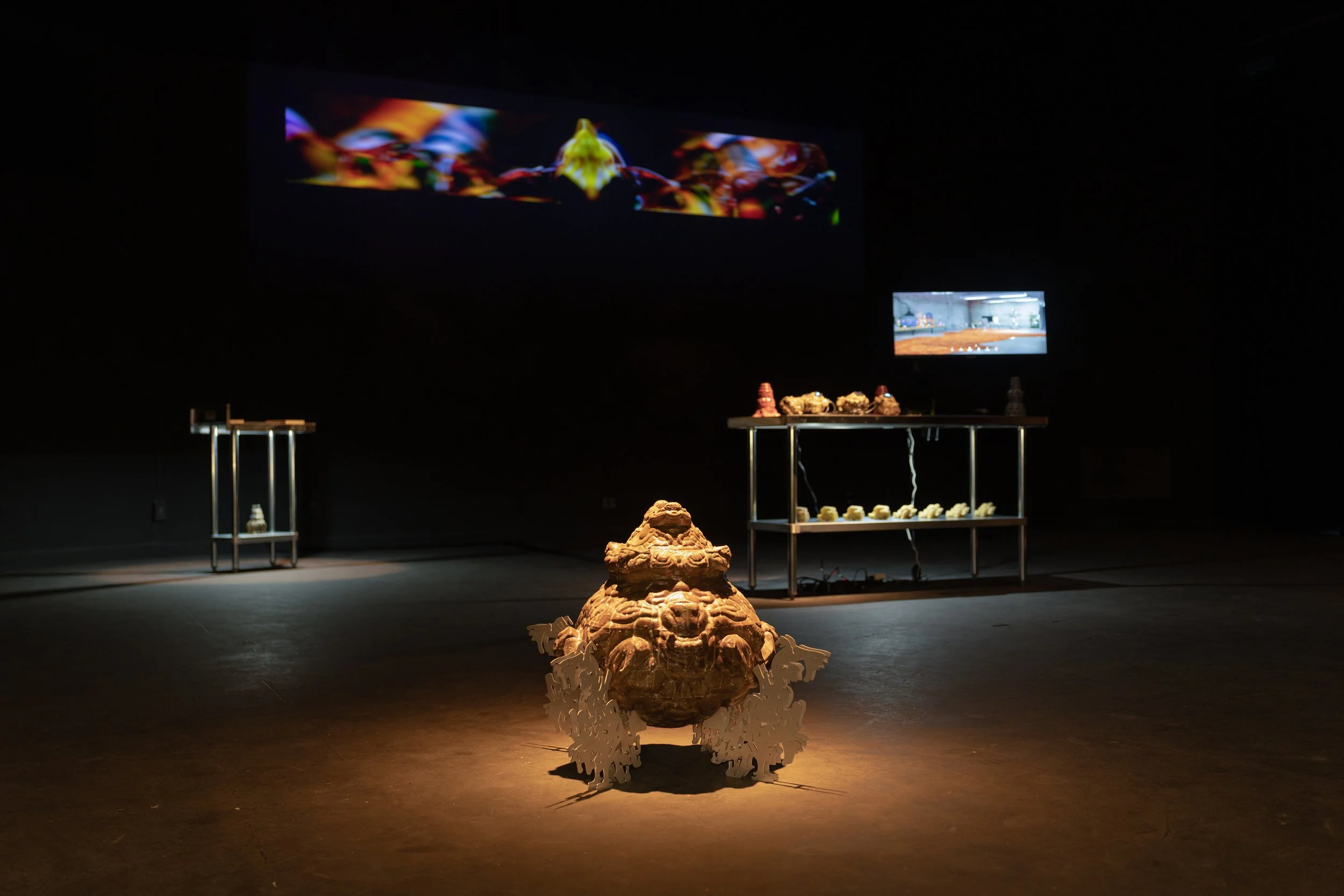
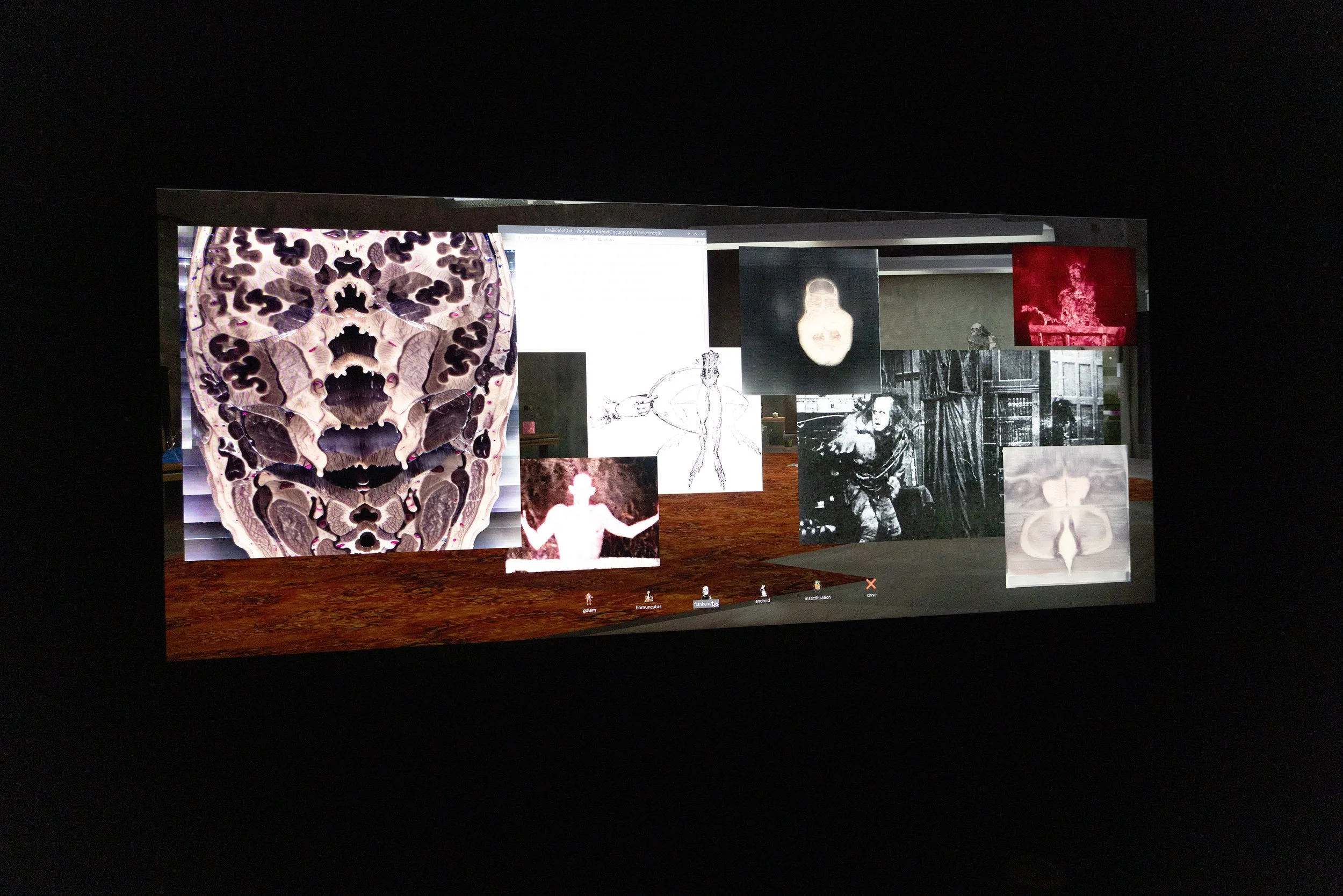
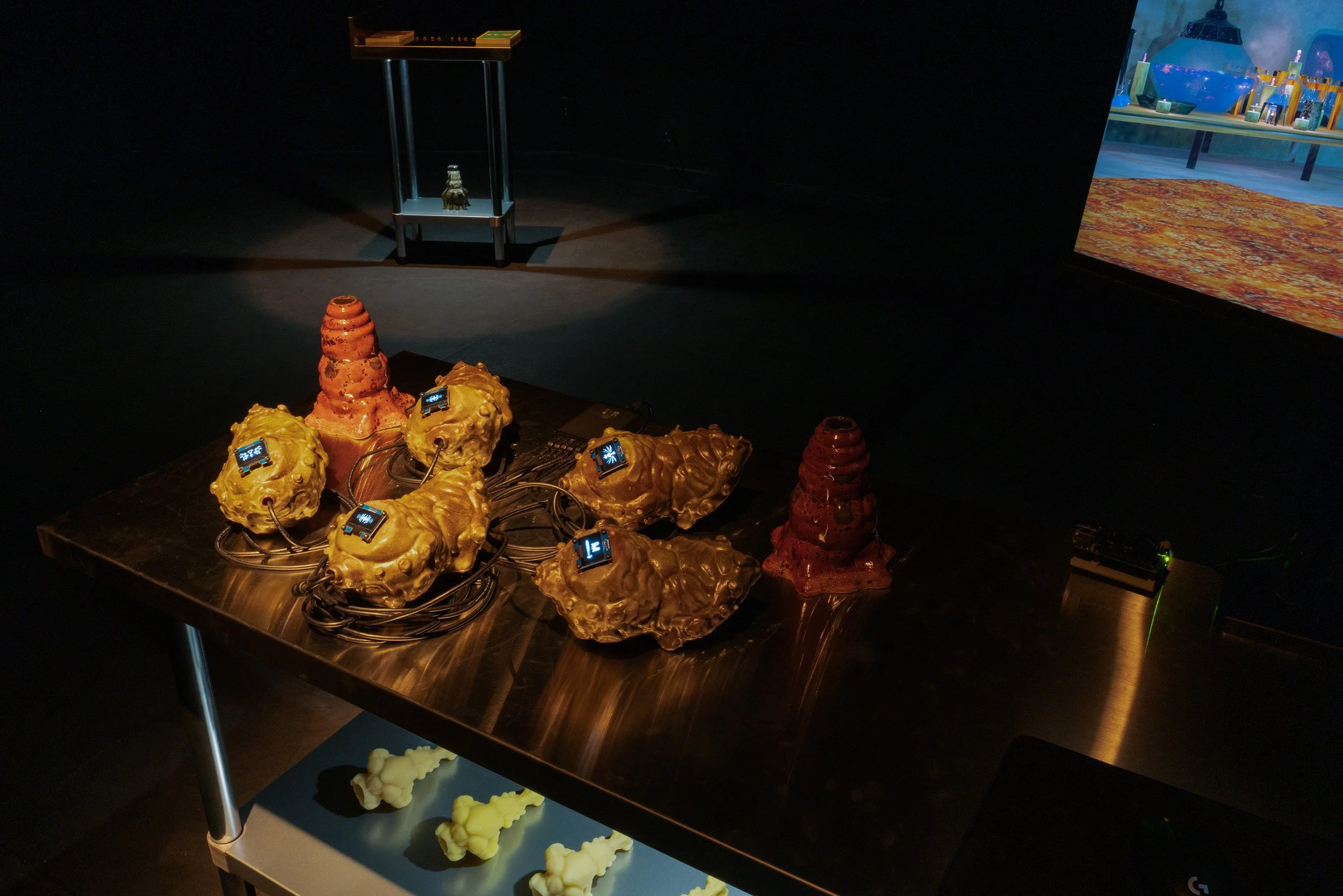
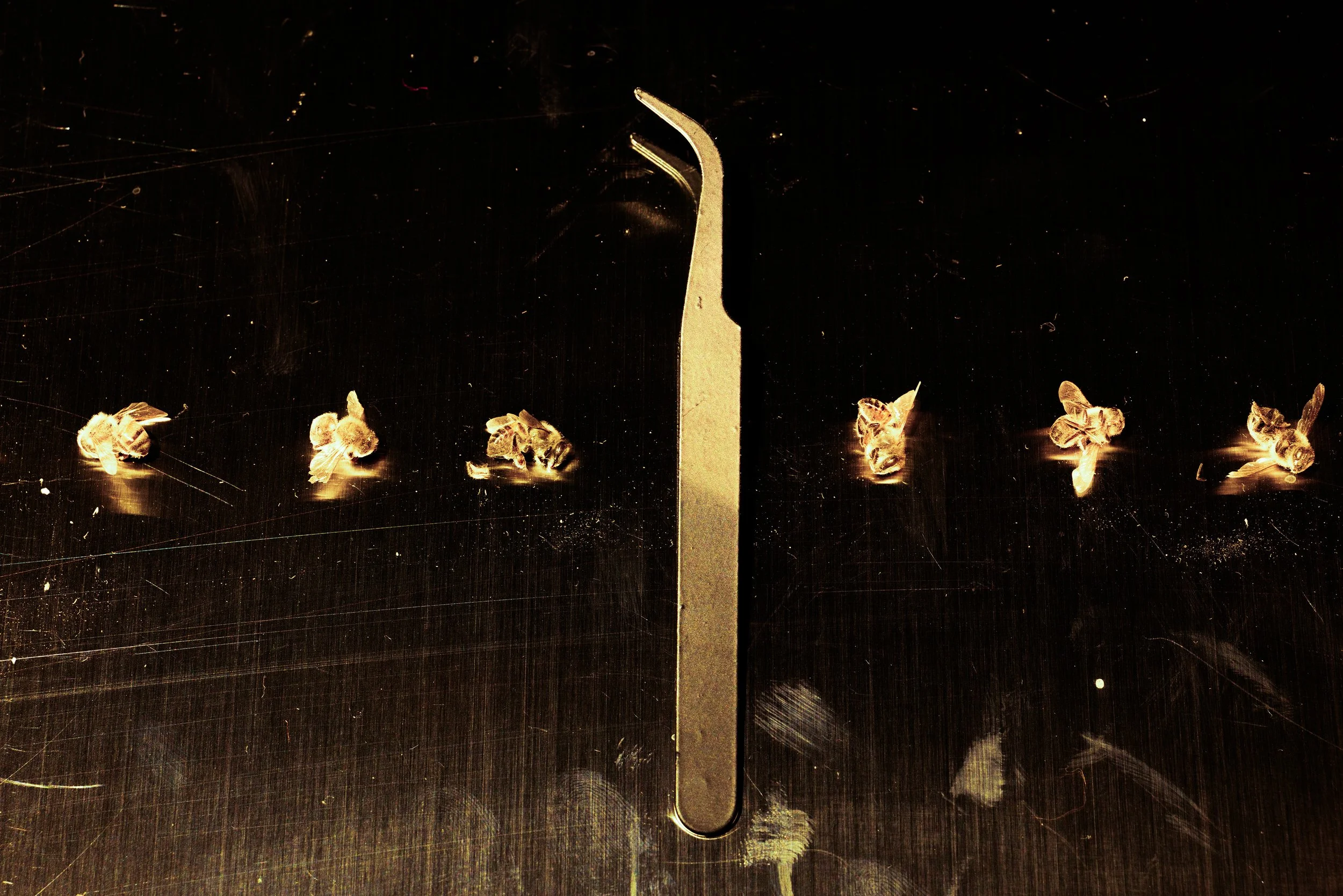
Within the installation the viewer encounters an alchemist's laboratory after the process of insectification has occurred. This alchemist has failed to produce any of the mythical models of the artificial human, ultimately renouncing the homuncular project and instead deciding to turn himself into a bug. The show presents two workstations, each with small insectoid sculptures alongside the alchemist's research materials. One workstation houses a computer, where viewers can click through several digital collages, sifting through image, video, and writing to reconstruct the alchemist’s journey.
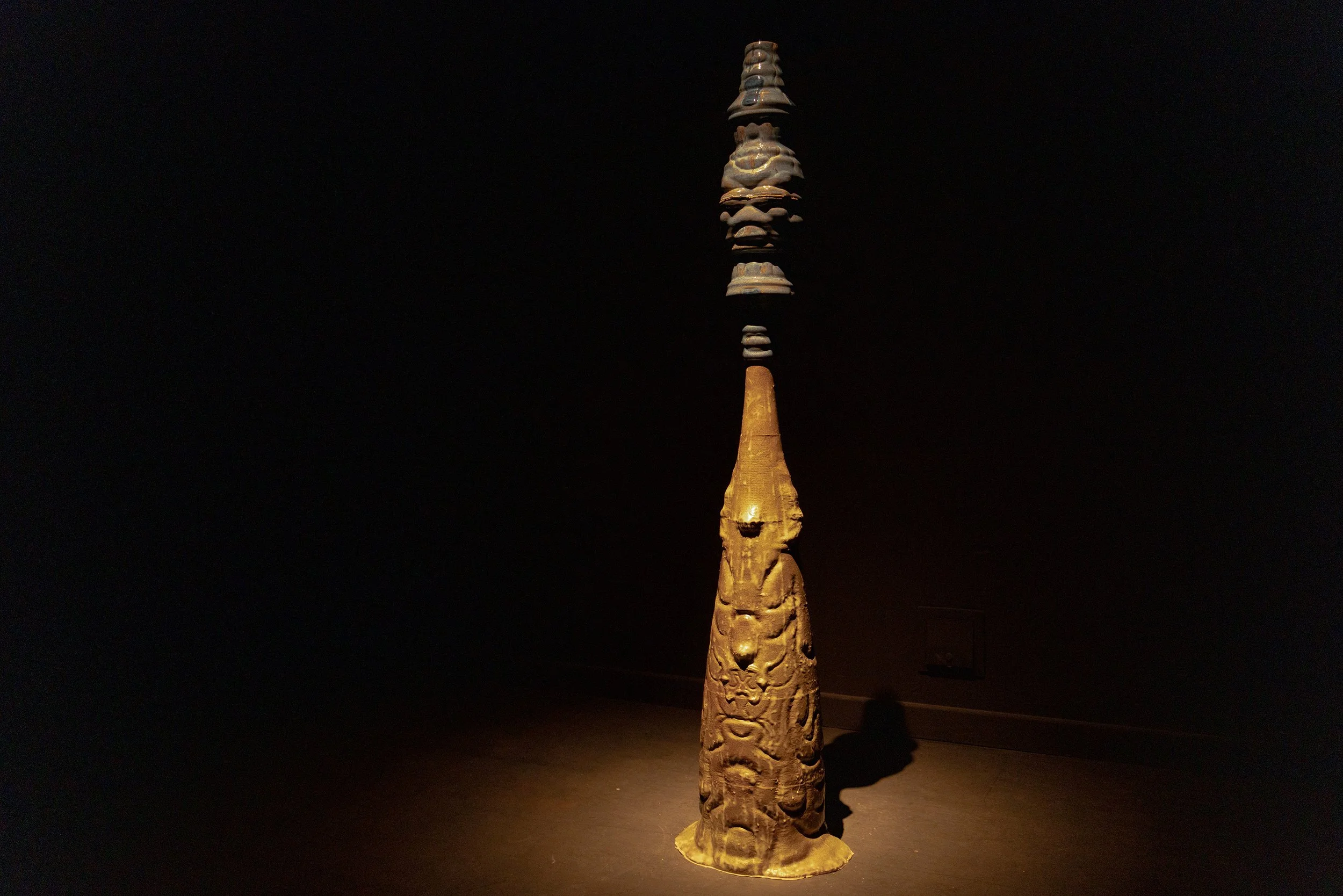
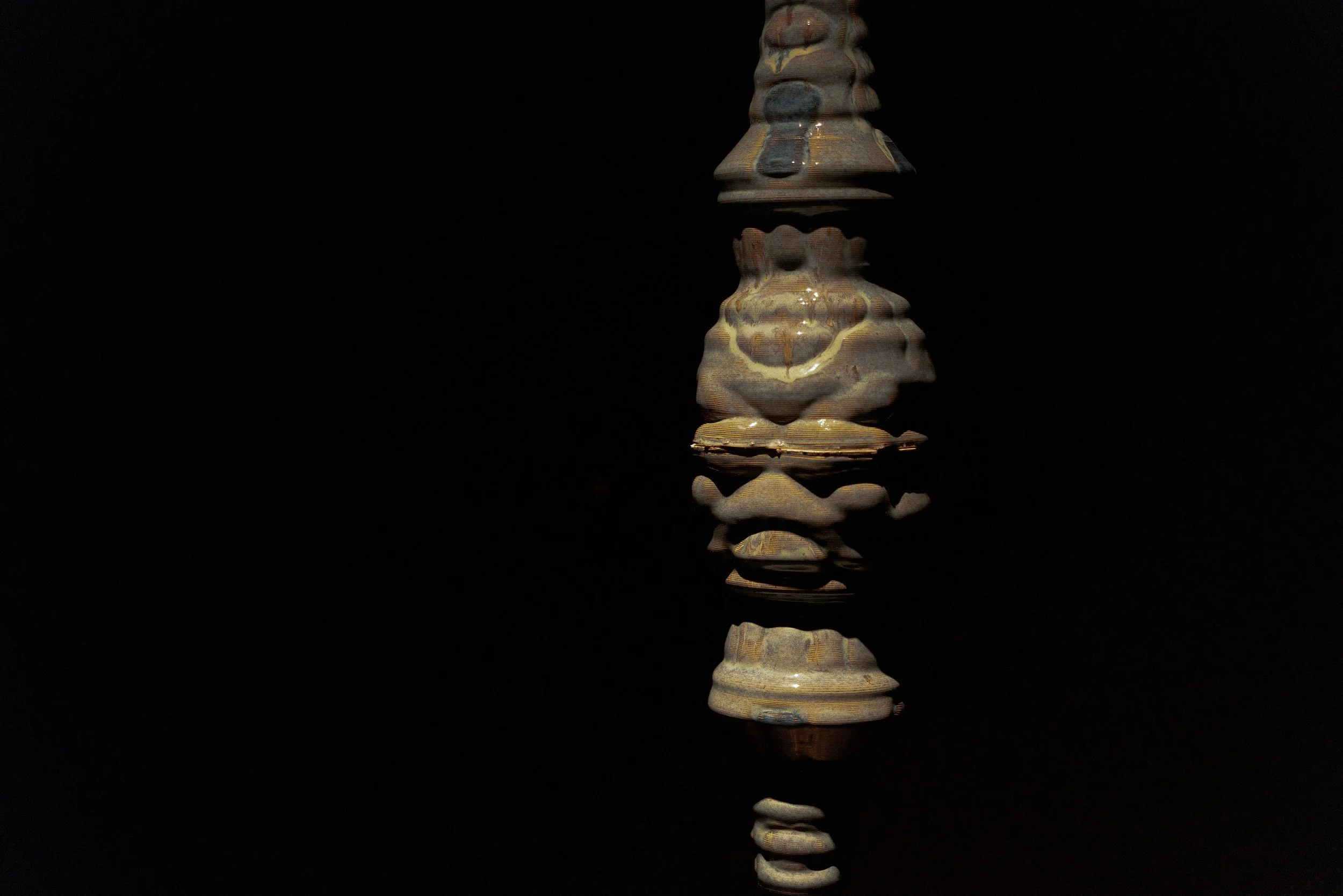
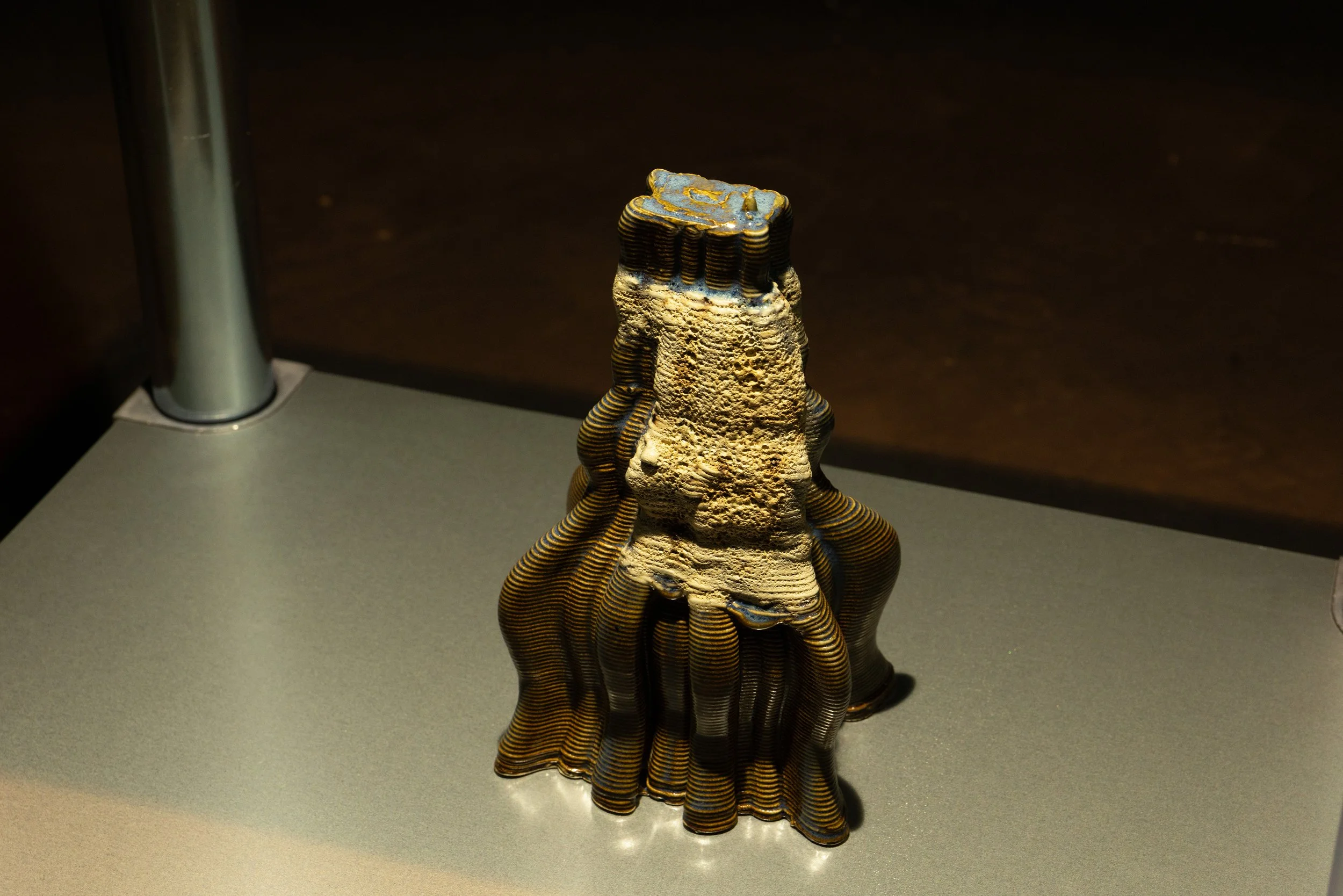
The show also contains post-transformation artifacts. Three sculptures arranged in an arc across the room. These are religion-technical artifacts meant to aid in the process of insectification. They are refracted, reflected, chitinous, and obscene.